Episode Transcript
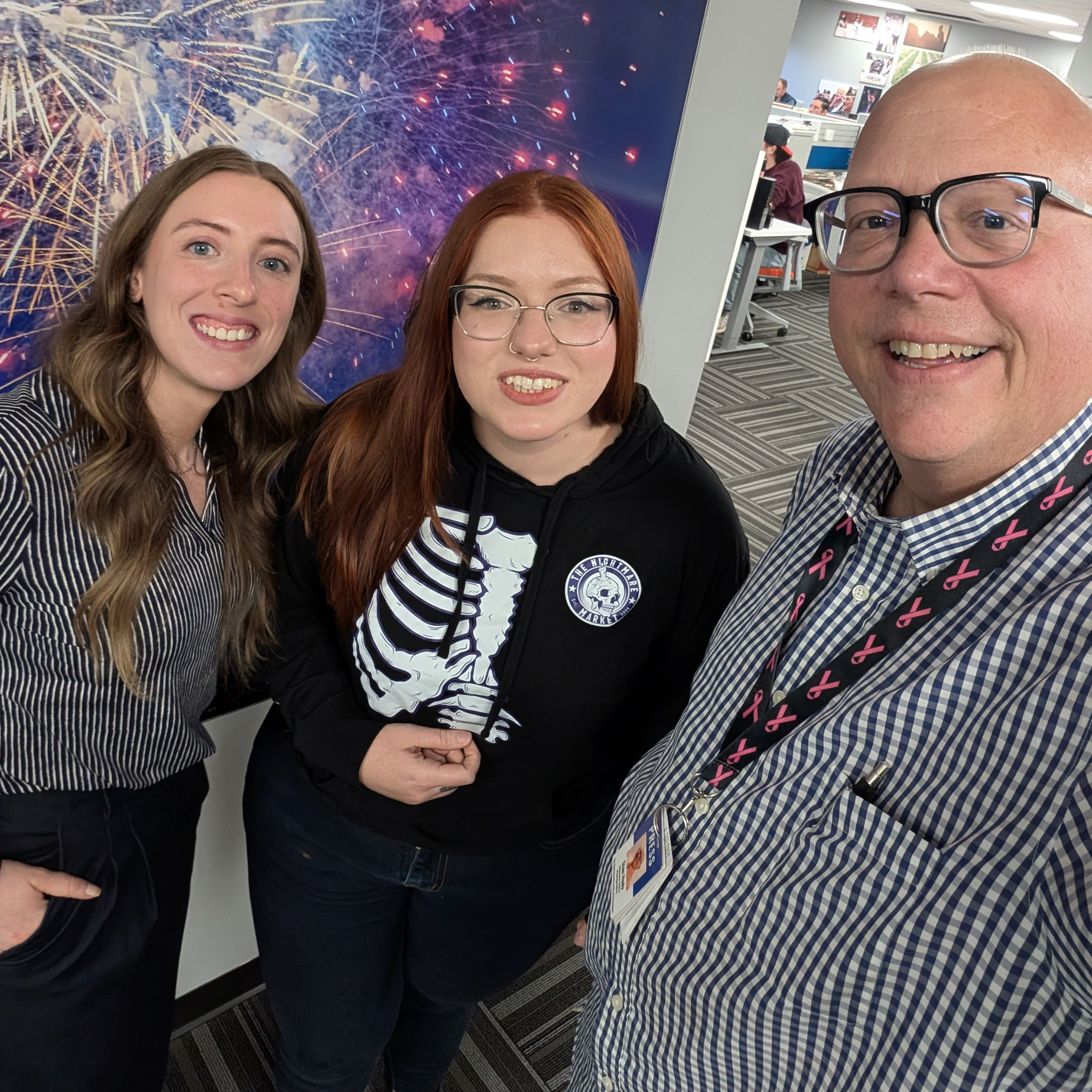
[00:00:00] Speaker A: All right, Stan and friends is back and better than ever. And we're happy to bring in our senior editor, or as I've always known him as my editor here at the Daily Gazette, Miles Reed, who is in charge Manning managing our community journalism fund staff. Chad Arnold, Ted Remsnider, and Miles has taken over the role of education reporter.
And when's the last time you had like three bylines in a week?
[00:00:26] Speaker B: It's been a while, Stan, because it's even since I came back to reporting. I don't report all the time, but it's, it's pretty fun
[00:00:34] Speaker A: and a heck of a week. And that's why I wanted to bring you in on this Monday is because you had three great pieces letting the capital region know and the Daily Gazette family of newspapers and our six dailies and multiple weeklies.
It's like everything kind of hit it once we the student enrollments falling, the. You did a great piece on salaries, which always gets a lot of reads because people always want to know what other people make. And then the regents, you know, little nightmare back in my life of thinking of regents and taking tests or not taking test.
So just what's the week been like? I mean, did you ever imagine looking at education thinking longer pieces and more in depth? And also in this week it was like 1, 2, 3.
[00:01:24] Speaker B: I don't think I would have anticipated it. But one thing I can say is the interesting thing is all three of these stories that broke last week that were big all around New York State, they're all interrelated. So, you know, one of the stories is about salaries among educators. So that's teachers and administrators. By and large. Once again, New York State has the highest paid teachers and educators in the whole country. So that on its own is interesting. But that's also a big driver, you know, having to do with budgets, why these school budgets are so darn high. And that was another story that I did, that despite the fact that New York has been losing population, especially upstate. This is according to the policy researchers that we talked to for the story from Ualbany at the Rockefeller College. They talk about it upstate, especially with rural areas. These districts have just hemorrhaged enrollment, population decline. It's not a surprise, but it's been a 20, 25 year slide. So now you've got these districts who are like half, in some cases half the population they had 20 years, but their budgets are twice as big as they used to be, which, you know, cost of living goes up and everything. But some of the researchers we talked to, and especially some of the watchdog advocates. They're just saying it's way out of line with reality. It's like something has to happen. Again, goes then back to this issue of the cost of the staffing. A huge chunk of these budgets is salaries.
[00:02:56] Speaker A: And then also, you know, we had regents, you know, the gift that keeps on giving.
We're getting rid of regions. We're not making it mandatory, we're making them optional. And then they've gone away, and now apparently they're back.
[00:03:10] Speaker B: So one of the words we used last week was this bombshell announcement, and it really wasn't even an announcement by the State Board of Regents. They subtly dropped this bombshell piece of information in their meeting, a monthly meeting, last week. And I know that I was one of a handful of reporters who were just sort of scratching their heads, saying, did we just hear what we think we heard? Because they weren't very clear about it.
But the reality is that this move to change New York State's testing and graduation requirements away from the mandated Regents tests, which on its own was controversial, but what they're saying now is that, okay, so timeout, contrary to what we said two months ago, where we're really going to disincentivize de emphasize the. These standardized tests. Oh, by the way, not only do the kids have to keep doing tests, they have to take four Regents tests during their high school career, which stand for people of our generation. That was standard. But the whole transition movement is away on the part of the Regents, away from these standardized tests and more to alternative assessments. But it turns out because of some federal laws that apparently somebody didn't notice, wasn't aware of, we're going to have to keep taking these tests, at least for the next couple years, and maybe in. Definitely.
[00:04:33] Speaker A: And with that, you still have the stress of taking a test. But then there's also the grades won't appear in a transcript, and they won't impact your diploma participation award,
[00:04:48] Speaker B: which is to some people, just this massive insult. So they've now taken this route, and it's meaningless.
So what's the message we're giving to the students saying, you have to do these tests. And by the way, districts have to spend money to do these tests. And that's one thing we're looking into, is how much do they spend? Because it is a lot of money with proctoring, with grading, the whole process, just the purchasing of the equipment.
So the message to the students is the big question that I think a lot of advocates have on Their minds is that.
So these are just to meet some federal requirement for funding that they don't really mean anything.
That seems like it's something that's going to have to be rectified or somehow addressed by the Board of Regents on what their directive is to the districts, to what they're going to tell kids.
[00:05:39] Speaker A: And we're here with Miles Reed, senior editor with the community Journalism Fund here at the Gazette News Group, or the old school Gazette family of newspapers. Apologize, John. The salaries, you know, back in the day when we were 36, 42 pages deep, and you'd run that big agate of teacher salaries by district, a lot of furor from the employees. But it is public information. Anybody can get it. But we just handed it to them in our print versions.
This was a little bit different. You looked at the top salaries across the capital Region across New York State, and 83,000 educators in New York State made $100,000 or more.
5,000 of those were in the Capital Region.
38 made more than $200,000 a year, with the average superintendent, New York State, 190 or Capital Region, $197,000, sixth out of nine in the state. So on that kind of thing, like, we're kind of low.
So my lesson was I probably should have been an education major.
[00:06:48] Speaker B: Me too.
[00:06:50] Speaker A: The conversation we have every budget season is, what are you voting no against?
And unfortunately, salaries and benefits are 85, 86, you know, a huge number of the budget locked in.
[00:07:05] Speaker B: Well, it's interesting you bring that up because, you know, while salaries are controversial, when we do a story like that, it does incredibly well online because I think a lot of people get frustrated and important driving factors.
This isn't just a vacuum. You know, we compared those average salaries of these educators to the median income in some of the communities that we cover. And we cover 55 districts now in most of them, this. This teacher. The average teacher pay is way above the median. So. So that's one driving factor. But the interesting twist on this, too, is even though the public outcry is pretty great, that this is too much to pay for, you know, especially some of these teachers who are essentially 10 months of the year, they have every kind of break. And it's not to say that there's not tremendous teachers out there, but by and large, this idea that you have to incentivize these teachers, I think that's an outdated way of viewing it. But on top of all that, even though there is this public outcry about these salaries, it turns out that with these local school budget votes, 96% of them pass when taxpayers go to vote. And that was part of our story, that we really took a deeper dive. And this idea that people are in general, in principle, opposed to maybe spending that much money, except for when it's my school, it's my district, I don't want to change anything.
What we're finding is people, they don't want to change their nicknames when they got mandated to change them. Right.
Because that's our identity on top of that.
And we did. We had a story that joined this.
This one that we did on the weekend about these. This costs. Out in Montgomery county, in Kanajoharie and Fort Plaine, twice over the last three or four years, those voters have been asked, do you want to merge those two districts? Because they are both bleeding enrollment and their budget numbers are going way up. They both. They're both losing, like, they're down, like, 70% of their student body over the last 20, 20 years, which in any business would be the cause to change things radically. But their budgets are actually almost twice as much as they used to be, despite these drops. But what we're finding is that even in these local cases, in that case, the voters don't want to merge. So they don't want to merge. They're not going to stop electing, you know, passing budgets. So it's a really con. It's a conundrum. So we're looking at this, and some people feel like this is one of the. The biggest reasons why New York is losing population. This cost of. Of owning a home and paying taxes, because our school taxes are so high.
But when it comes down to the local vote, voters, you know, pass these things.
[00:09:56] Speaker A: And with Fulton county, we have that conversation, and Paul Weger talks about it all the time. How many times has the Northville Mayfield vote come up about that merger? And every. And it's the. The turnout is paltry, really. I mean, it's a very, extremely small community, but it always gets outvoted. And It's. There's under 200 votes probably in the whole thing.
[00:10:20] Speaker B: That, I mean, that's. That's sort of a separate thing about how.
How little turnout is with these school votes, even though it is by far our biggest chunk as a property owner, our school taxes. But the voting numbers are.
Are tiny compared to, like, a general election.
You know, some people think it's because they. They should have these school votes when other elections happen in November so that people say there's one vote but in New York state, we do it in May.
A lot of people don't even realize it's on the ballot and we, we talk to them.
So you're right though, it's a small little group is getting a say on these things. And I think good government advocates say this is a flawed system, some kind of oversight from the state to try to crack down on this. And the state has to be fair about it. They've incentivized some of these districts to try to do this out in Fort Plain, Canajoharie. The state was gonna give them an additional $83 million in funding over the next decade, plus additional on top of everything else to find ways to make this merger. And it still didn't happen.
[00:11:31] Speaker A: Is it, is it one of those things that, you know, there's the phrase that sometimes you've got to let it burn, you've got to let it break before there can be a fix, or is there is this so often sometimes you hear you can't, can't throw enough money at it to fix it. That's not the fix.
[00:11:51] Speaker B: Well, I mean, and so that is something you hear people talk about. But another story that we, we highlighted last week was one of the highest paid superintendents in our region is at the Windom, Ashland, Jewett.
And this is a merger of three districts in the Catskills. And they've been merged since we were kids.
The superintendent there, in a district with 240 students for the entire district, is making $250,000 a year. So you bring out this, this question, when is it going to break?
Good government advocates look at something like that and say that is a problem. That is an example of an expenditure that is crazy compared to what the size of that business. In the business world, you wouldn't necessarily have a highest paid CEO for a company that's not making any money, doesn't have a lot of employees. It just would not happen in the private sector.
[00:12:50] Speaker A: And then also this also comes on, not necessarily the heels, but also a big part of this is also in our local coverage area. In our coverage area, we've got some superintendent searches that are going to be underway. Niskuna and then also Scotia, Glenville. So is this another one? You know, are these school districts also in a bind? Because, okay, we need to find someone new.
And I think we all, you know, in a perfect world, we all want 20 year, a 20 year plan for a leader.
You know, you don't want a five year leader. You're looking for a ten plus year leader. Are they now caught in this competitive environment and the best player on the board that maybe we have to pay, you know, 225 or,
[00:13:32] Speaker B: or even more than that, Stan. So they're going to have to. Niski unit is certainly going to have to pony up 250,000.
From our reporting it, it would appear that Niskuna, which is a pretty stable district in terms of they've held their enrollment number's pretty good, their budgets tend to pass, they have controversies, but they turn out excellent students.
They probably will have no problem finding a superintendent. On the other hand, Scotia, Glenville, you know, the other side of the county, I think is going to find a big problem. So they're replacing Susan Schwartz, who's been there for 20 plus years, but they have been losing a lot of enrollment. So that is a district that is sort of on the decline in terms of, you know, they're going to close an elementary school in this coming school year, which was not super popular when they had to propose it, but the numbers warrant and justify that.
So the dilemma with this is the really the have districts, the good districts, you know, the top ranking, where the achievement is best, their population stable, like Bethlehem, Saratoga Springs, Shen, Neskuna, they're able to attract top tier talent for these superintendent positions, but they often siphon it away from another district with less money, fewer students.
[00:14:51] Speaker A: And I kind of put Chad on the spot with this last when he was here talking about everything going on with Ellis and St. Peter's and things like that, about his role as the healthcare reporter and the Community Journalism Fund and with you leading this charge and playing that critical role and getting this established and off the ground and giving it the lift that we have, you know, almost daily now with the three planks we have right now and hopefully more for the new year.
How important is the Community Journalism Fund?
Because of the fact that we have three, three talented individuals that are focused on these key, these, these key themes, these key key planks that affect every one of our readers on a daily basis. How important is that?
Because what's life if we don't have the Community Journalism Fund?
[00:15:46] Speaker B: Yeah, I mean, it is a, an area, a space that more and more news agencies are looking at. In a time when, you know, federal government is, you know, basically attacking news outlets, media outlets. The federal government is certainly under the Trump administration in the second term, has defunded public funding of, of any kind of public media. So locally, wamc, pbs, so those entities. But other newer startup news agencies and also some legacy Outlets like us are finding ways to have some kind of a hybrid, which is what our model is. And again, it's something that in some other states is working really well. And I think what we're seeing is that the general public, a part of it, wants to support independent media because they realize through what sort of has been witnessed is that when you have fewer reporters covering town hall and city hall, budgets, school boards, all these kind of levels of government, that there is an increased chance there's going to be fraud or corruption or at least mismanagement without that.
It's called in our business the fourth estate. Right. We're not a formal part of the government, but this critical idea that the, the media serves as like a check or a balance on government. And so I think, you know, there, there is great hope that for the future of journalism that this is the model that is going to really take over more and more now.
[00:17:29] Speaker A: And when you were, you know, again, when you're looking across a broad newsroom and you're in your previous role and it's a day to day, it's wash, rinse, repeat, you start, you know, it's no different than sales. The sheet starts blank and then you have to fill it every day either with sales or advertiser and with stories and things like that and enterprise and things like that.
Did you ever imagine like there'd be a time when you could have people beyond a beat like this is their lifeblood. So there's a difference between a beat and to me, this is lifeblood. This is like almost 24, seven that you're given the tools and the time. And this goes back to a, a long ago NYPA conference where someone from Gannett said a, they apologize for making the making news free 20 plus years ago. He said, no, we never should have done it.
[00:18:15] Speaker B: We all tried it and it was a terrible decision.
[00:18:18] Speaker A: And the second thing was given time, reporters can produce great things and I think the Community Journalism Fund does that.
Can we hope to see growth? Can we see more of this? Can we see more entities adopt this?
[00:18:31] Speaker B: I mean that is certainly the direction that again we're, we're seeing the public clamoring for stories that are not just quick little bites that also aren't just driven by press releases.
What readers want less and less of is news. That's just driven by whatever the government tells us is the news. And if a newsroom is, and to a certain degree newsrooms have to do the basic reporting on breaking news, et cetera. But if you're too Reliant on what town hall, city hall sends out in a press release and what they say the news is, you're being controlled by that the government agency. What our team is trying to do is do more independent, enterprising stuff where we identify the news within all the press releases and what's going on in the world and say, well they want us to do that story, but we're going to do something different because we think the real story is something different.
[00:19:36] Speaker A: It's Monday, blank slate again.
Anything.
[00:19:41] Speaker B: There's so much stuff happening in certainly in the education world. So one of the big things that you know has broken in just the last couple weeks is Governor Hochul has agreed, bought in and signed on to this federal rule about vouchers for schooling. And so New York state taxpayers are going to eventually be able to do this where you could donate, give a donation to an educational institution.
And it, it actually is a tax deferment. So it's going to be interesting to see what kind of impact that has on public school systems. Hochul says it's not going to, you know, affect the, the funding for schools, but people, and I'm talking to some people today about it is have some questions about the long term impacts on this. Again, that's, that's one of many things. New York State right now we're, we're coming back to the idea that charter schools and vouchers and alternative maybe we really need to explore that. Advocates are saying given the state of, of lower achievement and driving costs.
[00:20:46] Speaker A: All right, well I look forward to it all the time. I love seeing everything you do and the team do. So that's always when I come in like what's going on? What's going on? And you know, sometimes you get to be a part of it through photo assignments and things like that. And we've, I think we built. It's been just, it's not even been a year.
[00:21:04] Speaker B: We're just barely getting going and, and we're, you know, and we're asking readers to sort of stick with us.
It's a pro, it's a process for all of us that are on this team. It's a little different than what most of us had been doing for a long time with the, the more day to day breaking things
[00:21:22] Speaker A: but it's, it's worthwhile again. Community Journalism Fund, part of the not for profit arm of the through the Skecti found managed by the Skecti foundation with the Gazette News Group. You can make a donation on all the stories there, there's a link there to give to the community journalism fund and you can always give to that. And it's outside the paywall. It's always in front of the paywall as soon as those stories drop. So it's a great chance to take something from the Gazette. Look at the Gazette, look at the quality we're bringing you day in and day out, not only on these three planks, but, but more as they develop and then also realizing the amount of talent that's also behind there on the day in and day out. So I tell people all the time we're worth the subscription.
It's, it's not a ton of money. And I, you know, until, until the last day I'm here, I'm gonna say we're the hardest working staff out there.
[00:22:06] Speaker B: Yes.
[00:22:07] Speaker A: And proud to be part of this team and happy to in a sense, I guess now kind of working with you versus working for you. But it's, it's been a pleasure for my five years down here so far. And then all those years before knowing each other and, and the team that's been here and is in place now, I think, I think, you know, I can't tell people enough. I think we're doing a great job.
[00:22:28] Speaker B: Thank you to being such a great ally and colleague on this team. Even though you're right about it, you know, the, you're sort of on the traditional side in the newsroom and we're the fund, but luckily we, the fund can receive assistance from the rest of you at the Gazette. And you're a great help in terms of knowing sources and photo ideas.
I know that all of us on the fund and the readers benefit too.
[00:22:54] Speaker A: Awesome. Thank you so much. We're going to have you on again.
[00:22:56] Speaker B: Thank you, Stan.
[00:22:57] Speaker A: Thank you for listening and thanks to all of my friends, old and new, who have made this possible.
Until next time, be well.
[00:23:06] Speaker C: Chad Arnold, reporter with the Daily Gazette.
[00:23:09] Speaker D: Ted Remsnider from the Daily Gazette.
[00:23:11] Speaker E: Rita Garrett hoodie, aka Mrs. Stan or Stan's wife.