[00:00:00] Speaker A: All right, welcome back to Standing Friends. And I wish I could tell you things are going to get a little bit brighter after having Ted Remsteiner on talking about election night and our interesting experience with sticker mule CEO and a current congressman elect, Anthony Constantino. But I brought in, I've imported literally Gino Dominic who comes to us.
Almost a year has been a year. Yeah,
[00:00:25] Speaker B: it's going to be a year in about two 10 plus days.
[00:00:29] Speaker A: Okay.
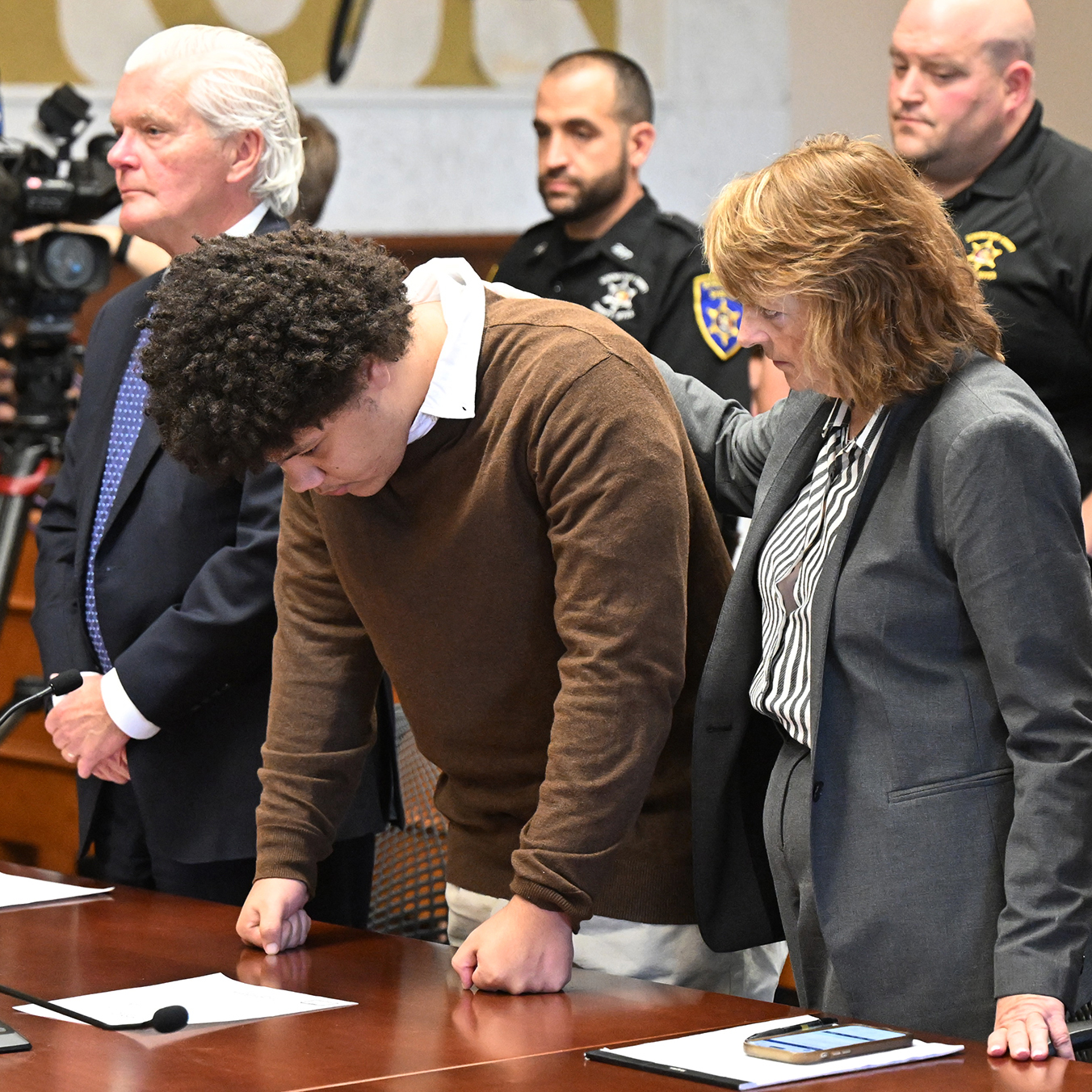
Cross country to us and just a wonderful addition and joining the audience team and been a big part of our digital team and things like that. And then kind of finding, creating forced upon beats. You be kind of become like the court guy because of availability and filling in for everybody else when you know, can't make court because you've got this meaning of that. Meaning you've kind of been the go to guy and brought you in because we had a verdict on the Samantha Humphrey trial. Raymond Wright Jr. Charged with second degree murder and you were the go to guy throughout that and really the testimony portion and kind of in the sense living that for those two and a half weeks there.
So welcome.
[00:01:18] Speaker B: Thank you. Thank you. It's good to be here. Good to be here.
[00:01:21] Speaker A: You've passed by the podcast room 70 times. I've
[00:01:24] Speaker B: seen many an interview. So I feel honored to actually be here and, and live the experience.
[00:01:29] Speaker A: We will, we'll do everything we can. I, I, one of the, one of the goals, we talked about visions during sound. I got to get some photos up here of some guests.
[00:01:38] Speaker B: Yeah,
[00:01:38] Speaker A: you know, I don't be like the, the, the, the dry cleaner, you know, type of thing, but that's part of the plan.
But the elevator pitch of how did Gino end up in Schenectady? Because it's amazing because when I interviewed you, the question was, what do you think? I said, I think he' awesome. I think he's wonderful. I don't think he's coming.
And then Christmas came early and they said Gino took the job. So how did you get to Schenectady?
[00:02:07] Speaker B: Yeah, well, I, I grew up in Manhattan. I'd been in upstate a little bit here and there just for recreational fun when I was little. And I knew I always wanted to be back on the east coast after my family moved to California, after I went to college in Bloomington at Indiana University.
And this was an opportunity to go back to the environment I was missing for a long time. And this newsroom showed a lot of potential and a lot of promise. And I was going through what the website had and I was going through the socials and I saw where I could help expand, where I could add, where I could learn more. And I was excited about the opportunity to expand my own knowledge. Up until that point, I'd reported on a lot of more arts and culture stuff, a lot more people, focused profiles. So this was a very unique opportunity to look into crime, government, police, courts, you name it, I've covered it at this point. And it's been an amazing experience to just expand and to learn so much more than I ever would have imagined for myself.
[00:03:14] Speaker A: You're, in a sense, a little bit of it is also you're kind of like riding the wave because you're like one of the, one of the early entries onto the new digital SL audience team. And then we backfilled with tremendous talent, you know, two new bosses for, for me and, and for both of us. And the audience team is just. We're light years and we're, we're still approaching the vision of what was introduced several years ago.
So it's exciting with everything that we're doing.
And like I said, you're kind of, you're the AM guy, you know, you're, you're, you're clocking in at 7:00am and yes,
[00:03:48] Speaker B: I am
[00:03:49] Speaker A: coming in and picking up all the overnight and things like that. And like I said, pick up a lot of that court duty and things like that. And so we had, you know, trials on the docket and things like that. And I was there for instructions.
Kind of mundane, but interesting. Got the necessary approvals and art that we needed. And then you were there through literally all the testimony and then the closings and then you were, you were not available for the verdict day, which surprised me because it came rather quickly.
But you know, this all happened two years ago. So it was front page news consistently.
It took a period of time.
The tragedy, the recovery, the charges, pending court date and things like that.
So this was all new to you.
So what was, I mean, I'm assuming this is your first murder trial.
[00:04:45] Speaker B: Yes, it is. Yes, it is.
[00:04:47] Speaker A: So what, I mean, what was it like?
[00:04:50] Speaker B: Yeah, I mean, I went into it with an open mind. I had been covering court cases in Schenectady county for a couple of months now, usually sentencings or arraignments.
But my very first, my very first assignment in court was to cover opening statements for a just a trial involving an injured child.
And that sort of gave me an idea of what witness testimony looked like. And the very lengthy cross examination and direct examinations that'll that entails. So I went into it knowing that there was going to be a lot of affirming the existence of evidence. And especially in this case, it was a lot of expert testimony that was largely just confirming this evidence exists. This evidence has been taken for sampling. This evidence has been documented. Yes, I saw this evidence. There was a lot of that.
But there was also a lot of direct testimony from. There were two unhoused individuals who directly testified to overhearing what they described as a struggle between a young girl and a older male voice one night. The. The night Humphrey disappeared. There was also direct testimony from the friend she texted the night she went missing.
And he spoke on the stand about the messages she sent to him and how she appeared to be that night. So there was a very good balance of testimony in the standard affirming testimony.
[00:06:25] Speaker A: Not svu.
[00:06:28] Speaker B: It was a little different. It was a little different. You.
I'm a big fan of law, of legal films and TV shows. So you do go into it thinking every five minutes there's going to be a jaw dropping moment and I'm going to be running to the phones outside, texting the editors and writing up a story as soon as I can. And that's not the reality. There were some very interesting testimonials and there was very interesting evidence presented, but a lot of it was very procedural, very lengthy, very not time consuming, but very prolonged looks into how evidence was discovered. Very standard. Here's what we did to find this. Here's how we applied for an affidavit for a wiretap. Very standard. Going over procedures.
[00:07:18] Speaker A: So on the outside, looking in, again, being familiar with the case, you know, because I was at the Gazette at the time.
Any. I'll tell you, I'll give you my aha. Moments from. From reading everything that you
[email protected] in print and online.
The. The wiretap information.
I was like, whoa, that really surprised me. They had wiretap for a period of time. The residents of Raymond Wright Jr.
The family. The family.
And then, I mean, I was bowled over. Like I thankfully was not driving when I read this. Rita was when Raymond Ray Jr. Took the stand.
[00:08:00] Speaker B: That was. That was a surpr.
I remember remarking to the editors and before the trial even started, it would be really interesting if he testified in his own defense. And I was told that really doesn't happen that often. Just because the risk to your own defense is that if the jury doesn't believe you or if the prosecution finds a way to pull at your words they find the thread that they can just tug at you can unravel everything that your defense attorney has worked so hard for.
And I do think that was what we saw when he took the stand. I think everyone was very surprised. You could see it with the reporters at least. No, we weren't expecting it.
And the prosecution did. Christina Tremonte Pelham, she did what she did best. She pointed out and got right to admit the numerous times he had lied. She got him to try to explain why he had changed his story at least five different times since Humphrey went missing in 2022.
And it didn't necessarily directly indicate guilt in the moment, but it cast. Cast doubt on everything he had said. And the DA was. The DA's office was successful clearly. And the guilty they got. There was a guilty verdict but they were successful in their goal of saying you cannot believe what he is telling you.
[00:09:17] Speaker A: And I think that was a good play by Peter lynch who the first day of instructions we see so many people and I always say that I'm the old non good looking Bon Jovi. I've seen, I've seen a million faces and I can't remember them at all.
And I, I'm looking at Peter lynch and I'm like, I know he looks so familiar to me. Look like somebody used to work for aged and things like that. It was just a familiar, you know, facial structure. And then as I got back to the car and I'm putting and I embarrassingly I had to ask him his name, his co counsel and he gave it to me. He's very kind.
He was the judge on the Schoharie Limmel trial that Ted and Chad and I had worked on. I was there as a photographer and he was the judge in that case in Schoharie County.
And now he's a, you know, a defense attorney and I'm like oh my gosh. So that's a change. So that was interesting. And then during the first day of instructions and things like that, as they were starting to select the jury, the prosecution presented their witness list. Four pages a witness list they had. Defense has zero.
[00:10:22] Speaker B: Yeah.
[00:10:22] Speaker A: And that's what led me to believe that I don't think that Raymond Wright Jr. Would be taking the stand.
[00:10:28] Speaker B: Yeah,
[00:10:28] Speaker A: again they have it in their pocket. Again the defense makes sense that they wouldn't say oh yes, defendants gonna take
[00:10:33] Speaker B: it. And the. Yeah, the burden of proof. They said it time. The judge explained to the jury time and time again the burden of proof is on the people. It's on the District attorney's office to prove that Raymond Wright was guilty of anything the defense proved. Doesn't have to cross examine. They don't have to provide their own witnesses. They can just say, we have, we're not calling anyone.
They don't have to. If they, if they believe that their case is strong enough without even having to say anything, they have every right to do so.
[00:11:00] Speaker A: So the timeline is you're there through Friday. So the closing state is closing, arguments are made and then the, the case is given to the jury late Friday.
[00:11:10] Speaker B: Yeah,
[00:11:11] Speaker A: have the weekend.
Okay. We know they got to come back Monday.
So I'm there Monday with Chris Daly, somebody new who will bring on, hopefully get something juicy we can bring on the podcast about.
And so no notes. First thing, we're there, no notes from the jury. They're just, they've met, they're deliberating.
Then we get notes from the jury, questions about GPS data, search data.
Like the two big things that they had open court conversations off the record, just going back and forth. And I'm like, okay, now they're going to give that back to the jury.
And when they, when they formulate that everybody's in agreement, they bring Raymond right in so he can listen to what's going on, what's going to be presented, the jury clarifications and yes and nos. And again, the clarification like, yes, no, we can't give you CSI side by side.
[00:12:06] Speaker B: Yeah,
[00:12:07] Speaker A: GPS data was one of the big things. Bring the jury in, explain them what's going on along with the defendant.
And so the jury now has his information. Judge instructs him, you're going to go back to deliberations. And this is shortly after 11:00am he goes, okay, lunch is going to come at 12:15. It's going to be a working lunch at 1:15.
The court's going to recess from 12:15 to 1:15. If you need anything, you can send a note. But we were not going to meet again until 1:15. I go to the car, stop loading photos from instructions, and I'm there 20 minutes. I said to Chris, I'm like, they're, we're going to do this 2:30 in the afternoon. I get a text. I think they're coming back with a verdict. I'm like racing back in.
Were you surprised how short the deliberation was on the jury? I mean, you sat, literally sat across from the jury, six men and six women.
I believe the numbers by the end because there was a alternate, two alternates inserted. So any inkling that this would be a short deliberation. Or do you think this could play out? You know, the holdout.
[00:13:12] Speaker B: I was very surprised to see such a turnaround from the jury. I would have expected at least something maybe at the earliest end of Monday.
I was honestly expecting it to go into Wednesday. I know we had election Day. The. There was no court, so I was honestly expecting maybe something late Wednesday.
Just because a lot of the evidence presented by the prosecution was circumstantial and there was reasonable doubt in a lot of what they were presenting.
Yes, there was GPS locations and there were.
There was audio recorded from the wiretaps in his home. And there were some suspicious searches on his phone, like him Googling the movie where a neck is broken. Although if I remember correctly, that was the night she disappeared and not afterwards.
But he also did Google, how long does it take a body to break apart in the water?
The Valbos were suspicious. You could very much look at that as the perspective of a curious teenage boy who is scared that he is the last person who was with a young girl who was missing. He knows that their last encounter together was a fight. He knows that doesn't look good. He knows that her friends and family are already looking at him with a little bit of suspicion. He is a reasonable person of interest by police.
So from that perspective, you could see reasonable data to his innocence.
However, there was a lot of evidence pointing to the contrary and raising questions that he, even in his own testimony, was not able to provide an answer to that in a way that made sense or quieted those doubts. He testified about his socks being in the water, found right next to her coat, which was found in the water the day after she went missing. And he claimed that he had taken them off after she had pushed them him into the river during. After their fight the night she disappeared.
And the prosecution pointed out in their closing statements. Doesn't seem to make sense that he simply took his socks off and threw them away and then went right back to fighting. Seems like an odd step to take in between.
And the jury clearly agreed there was reasonable doubt for both arguments. But I do think in retrospect, there is more. There was more doubt on his claims of innocence given the amount of evidence that was presented against him. And especially in the prosecution's closing statements. They pointed out the timeline of Humphrey's text messages to her friend at 11:18. When he texts her, asking if she's okay. He knows she's downtown. He's asks if he can pick her up. She says, I'm all good.
And then about 18 minutes later at 11:36, she sends him her location and tries to call him before her phone dies. And the prosecution pointed out that if they're fighting the entire time, as Raymond Wright suggested, why is she stopping the fight to text her friend at 11:18 saying everything's fine, but then 18 minutes later clearly indicating that she wants someone to come find her.
And the prosecution ended on that hard hitting note of the last word in this case is Samantha Humphries. And they pointed out that the last act she had was sending her location was trying to call someone so that people knew who she was with and knew what was happening to her.
[00:16:30] Speaker A: The. And then because of the, because of the, the dates of this but also the ages.
Raymond Wright Jr. Again it's adult trial.
It was. Was thoroughly explained. His sentencing will be under a youthful a youth status. I think because it's. If I'm correct me, if I'm wrong, I think it's 7 to 15 to life for second degree murder. Whereas if he was an adult at the period of time he was, how old was he at the time?
[00:16:57] Speaker B: He was 14 when the murder
[00:16:59] Speaker A: occurred. Now he's, he's older and it could have been 15 to 25 to life.
[00:17:05] Speaker B: Yeah.
[00:17:07] Speaker A: Conversations around the courthouse about that number. Do you think that's going to happen as we get closer to January 20th?
[00:17:14] Speaker B: I think we're going to hear more and start to get a firmer idea closer to the actual sentencing date. I know just from sitting by the family over the course of this trial, I know it sounds like they would like to see the full sentence and it's not exactly surprising. A lot of the public opinion seems to be that justice needs to be done.
And the public opinion has been very strong in this case for quite some time. I know when I was first being told about this case, one of the earlier things I was informed of was that this is delicate because he was arrested when by the time he was arrested the public had already designated him guilty.
So a lot of people were concerned that the alternative outcome to this trial could be.
Could be messy to deal with.
[00:18:01] Speaker A: Right. Could be very volatile,
[00:18:03] Speaker B: very.
[00:18:04] Speaker A: And there was a little bit. And there's some outburst as people exited and things like that I think on his behalf.
But he's obviously remanded then wait till January 20th. I don't know how long that'll take. So I don't know if they do the victim impact and things like that. So that could be a lengthy day before a judge sends that down.
You Got it under your belt? I mean, have you talked to. I mean, what was the conversation like with your girlfriend? You obviously you not being. You could talk about it or, or talking with the family and, and friends and things like that. You're like, what was like, oh, yeah, I'm covering a murder trial. I mean, was that a conversation or I keep that close to the vest.
[00:18:42] Speaker B: It is a conversation mainly because it's something that you kind of can't believe and talk. And being able to talk about it out loud really did help inform my own coverage. It kind of helped me get a better idea of what information was important to keep drawing attention to in stories. And especially when you're writing over one to two stories every day for almost two weeks about one trial, one of the biggest hiccups was having to constantly go back three days in my notes to reference something in more detail that was briefly mentioned that day in court, which was important to me. However, when I. That stood out to me when I started talking to people about it because people started going, friends and family started going, wait, what does that mean? And I'd go, well, now I can't explain it. And then I was going, this is exactly how it needs to be presented when I'm writing. You need to be able to jump back and forth without confusing the reader because there is a lot of back and forth happening in court. And especially when during a cross examination, the defense of the prosecution could be. Could reference anything that has been discussed in the past few days and the jury remembers that, the gallery remembers it. But the reader who's clicking on the story for the first time because the headline finally caught their eye, might have many, many questions about it.
[00:20:05] Speaker A: Well, it's, you know, inside baseball. It was well received in print and online.
The numbers were there and the writing was great because I was really. That's how I was keeping up with it, is doing the multitude of things I was doing. You now have a date. You got January 20th. So, like, what's you think it's going to kind of go. Go into a box, going to go to sleep for a little bit and then after the new year, you can start kind of like going, okay, let me.
Do you mentally think, like, for this one? Like, do you think you have to mentally prepare yourself or like what might be your thoughts? Like getting ready to write this?
End of story.
[00:20:41] Speaker B: Yeah. I mean, the preparation process for this trial in particular was really being. Trying to be ready and to brace myself for anything, especially given evidence would be shown in court that those included Autopsy photos. Those included photos of her body pulled out of the river just on that base level of being ready for anything to be shown.
And it was. And it's an intense case. It's very, very sad.
And sitting near the family reminded me of that constantly. This is a child who was lost. This is a child who's not coming home. And these family and friends have lost someone they cared about. And it was.
It's very tragic. And this doesn't. I remember, I'm reminded of the father. Jeff Humphrey was quoted in Ted Remsneider's article before the trial. He said, this isn't going to bring her back. But, you know, it's. It's justice and hopefully it's justice. Hopefully. It's a step towards everyone healing.
And I think that's what I'm preparing myself for with this sentencing is. I think it'll be a very emotional day. I'm sure for the family, I'm sure for her friends, I'm sure this, for them, this is a day they thought about, but never maybe fully thought would happen, especially after so much time passed between her disappearance and her body being found and an arrest actually being made.
So I think reminding myself of the emotional impact in the heart at the root of this, yes, it's a story about a sentencing, which I've written countless times. But there is a huge human impact level to this. There is heart, there is reality. These are real people who have experienced a loss. And it's important to write that and capture that in a way that shows that this is more to the community especially.
[00:22:28] Speaker A: We did a great job. I enjoyed reading it on the road, maybe at the desk once in a while, but no, it was great. And we. Again, you know, it's like the best player on the board and.
And I think you did a great job and well informed. And again, it was well received, which is what we're all here for, is to, you know, in this case, share stories, more than tell stories, but just from what everything happened, you know, privilege of being in there is. And I think that's what also makes it when we make the request to be in, you know, in these. In these court cases, you know, the job that we do is receive the way it's received, then ensures what the next one we ask for.
You know, sometimes maybe a little trickier and things like that, but you definitely did a great job with that. And then we'll see what comes up between now and then, who know, maybe
[00:23:23] Speaker B: a.
[00:23:23] Speaker A: Maybe a Santa ride or something like that in between before we get to January.
[00:23:27] Speaker B: Yeah, you never know. Expect the unexpected.
[00:23:30] Speaker A: All right, well, thanks for coming in.
[00:23:31] Speaker B: Of course. Thanks for having me.
[00:23:33] Speaker A: Thank you for listening. And thanks to all of my friends, old and new, who have made this possible.
[00:23:38] Speaker C: Thomas Demopoulos, journalist.
[00:23:43] Speaker D: Kayla Eck, owner and director of the Nightmare Market and the Nightmare Expo.
[00:23:47] Speaker E: Ted Remsnider from the Daily Gazette.
[00:23:50] Speaker F: Rita Garrethudy, aka Mrs. Stan, or Stan's wife.